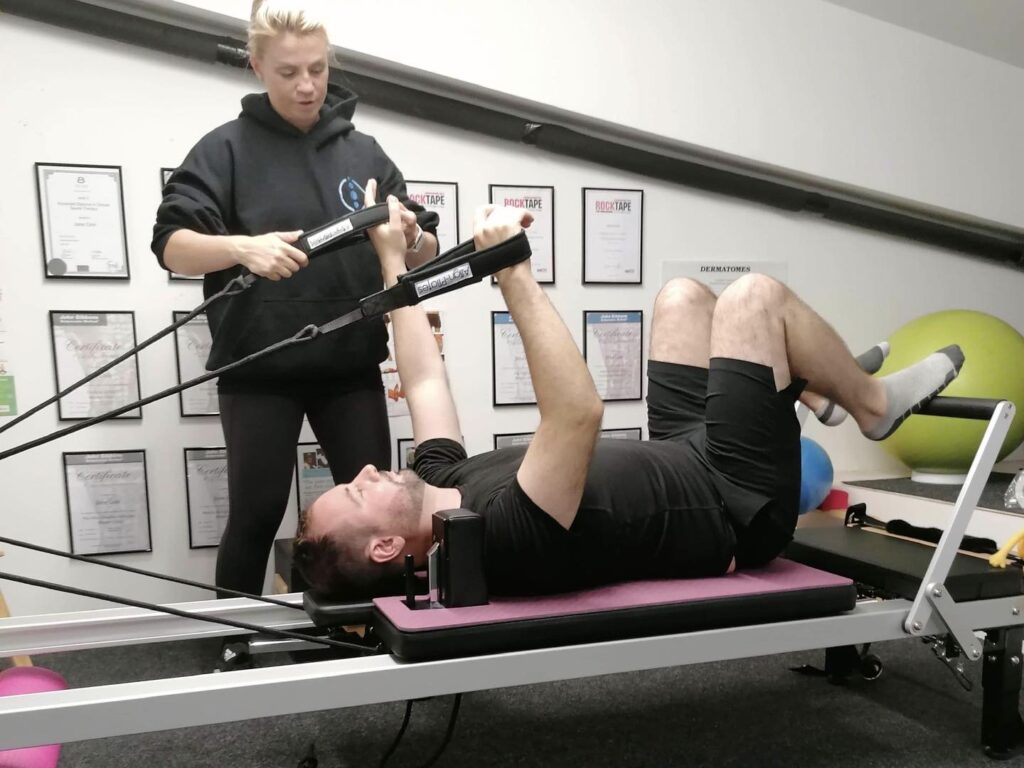
Why Do Physiotherapists LOVE the Reformer?

A Tool for Recovery and Performance!

Traditional exercises and manual therapies may come to mind when you think of physiotherapy. But have you ever wondered why some physiotherapists, like me, incorporate the Pilates Reformer into their treatment plans? This innovative piece of equipment has a rich history and offers unique benefits that can bridge the gap between injury recovery and performance enhancement.

A Brief History of the Pilates Reformer:

Joseph Pilates invented the Pilates Reformer in the early 20th century as part of his comprehensive approach to physical fitness, which he called “Contrology.” Designed originally for rehabilitation, the Reformer helped bedridden patients regain strength and mobility. Over the years, it evolved into a versatile fitness tool embraced by athletes, dancers, and anyone looking to improve their physical capabilities.

Joseph’s concept was simple yet revolutionary: controlled resistance through springs and a sliding carriage could strengthen and lengthen muscles simultaneously. This principle is just as relevant today as it was a century ago, making the Reformer a natural fit for physiotherapy.

Why Do Physiotherapists Use the Reformer?

  1. Controlled Progression for Recovery:
    Rehabilitation often requires balancing the body’s challenges and protecting it from further strain. The Reformer beautifully provides this balance. Its adjustable resistance allows me to tailor exercises to your specific needs, whether you’re recovering, you’re undergoing surgery, managing chronic pain, or addressing a recent injury. For instance, gentle resistance can aid in reactivating weak muscles, while greater tension can gradually build strength in a controlled manner.

  2. Restoring Functional Movement:
    The Reformer is ideal for retraining movement patterns that may have been lost due to injury or compensations. It enables precise, guided movements that mimic real-life activities. This focus on functional movement ensures that progress in the clinic translates to better mobility and strength in your daily life.

  3. Joint-Friendly Exercise:
    Many exercises, especially those involving weights or impact, can strain joints. The Reformer offers a low-impact alternative that protects your joints while still providing an effective workout. This particularly benefits individuals with arthritis, joint replacements, or other conditions requiring careful load management.

  4. Strength and Mobility for Every Body:
    Whether you’re an elite you’re or a weekend gardener, the Reformer caters to all fitness levels. It’s especially visible for targeting deep stabilising muscles, which are often neglected in traditional workouts. This translates to better shoulder control, core stability, and overall movement efficiency for pole athletes, aerialists, or anyone performing overhead tasks.

Injured or Not: The Reformer Fits Your Goals:

  • For Injury Rehabilitation: The Reformer allows for early mobilisation and gentle strengthening during recovery. Its versatility makes it suitable for treating various conditions, from post-surgical recovery to chronic issues like back pain or tendinopathies.

  • For Performance Enhancement: Even if you’re injury-free you’re Reformer can elevate your fitness. With exercises that challenge your range of motion, control, and strength, it’s a powerful tool for mastering advanced movements or simply feeling stronger and more flexible in daily life.

A Personal Touch:

At my clinic, I use the Pilates Reformer not only as a treatment tool but also to empower my clients. Whether you’re an athlete looking for peak performance or someone navigating the challenges of an injury, the Reformer offers a path to better movement, confidence, and resilience.

Jane x

Chartered Physiotherapist

Navigating Autumn: The September Shift and the Potential for Injuries

Navigating Autumn: The September Shift and the Potential for Injuries!

As the vibrant colors of summer slowly give way to the warm, earthy hues of autumn, our bodies and minds must adapt to the changing season. September marks the official transition into fall, a time when the landscape transforms, and so do our daily routines and activities. While this shift in seasons can be beautiful and invigorating, it also brings with it an increased potential for injuries. In this blog post, we will explore the unique challenges that autumn and September present and offer guidance on how to stay safe and injury-free during this transitional period.

The September Shift!

September is a month of transition, both in terms of weather and lifestyle. The gradual decrease in daylight hours can affect our circadian rhythms, potentially leading to fatigue and changes in sleep patterns. The cooler temperatures may encourage people to become more active, especially after the often more relaxed pace of summer.

  1. Fallen Leaves & Slippery Surfaces: One of the first things that come to mind when we think of autumn is the abundance of fallen leaves. While they create a picturesque landscape, they can also create hazards. Wet leaves on sidewalks and roads can become slippery, increasing the risk of slips, trips, and falls. These accidents can lead to injuries ranging from minor sprains to more severe fractures.

  2. Changing Exercise Routines: The cooler weather often motivates individuals to engage in outdoor activities like hiking, jogging, or sports. However, a sudden increase in physical activity, especially without proper warm-up and conditioning, can result in muscle strains, ligament sprains, and overuse injuries.

  3. Daylight Changes: As the days get shorter, many people find themselves exercising in reduced visibility conditions, such as early morning or evening workouts. This can increase the risk of accidents and injuries, as it becomes more challenging for drivers and pedestrians to see each other.

  4. Seasonal Allergies: For some, autumn brings with it an uptick in seasonal allergies. Allergic reactions can cause discomfort, fatigue, and decreased performance in physical activities, potentially leading to injuries due to impaired focus and coordination.

Preventing Autumn Injuries:

  1. Footwear Matters: Invest in appropriate footwear with good traction to reduce the risk of slipping on wet leaves or slippery surfaces. For outdoor sports, consider shoes designed for specific activities that provide support and stability.

  2. Warm-Up & Stretch: Prioritise warm-up exercises and stretching routines before engaging in physical activities. This helps prepare your muscles and joints for increased activity and reduces the risk of strains and sprains.

  3. Stay Visible: If you exercise during low-light hours, wear reflective gear and use lights or reflective accessories to make yourself visible to others.

  4. Manage Allergies: If you suffer from seasonal allergies, consider taking allergy medication as recommended by your healthcare provider. This can help alleviate symptoms and ensure you can perform at your best.

  5. Listen to Your Body: Pay attention to any signs of discomfort or pain during activities. Pushing through pain can lead to more severe injuries. If you experience persistent pain or discomfort, seek professional advice from one of our team.

Autumn and September bring a unique set of challenges and opportunities for outdoor activities and exercise. While the beauty of this season is undeniable, it’s crucial to remain vigilant and proactive in preventing potential injuries. By taking the necessary precautions, staying mindful of environmental factors, and listening to your body, you can fully enjoy the autumnal transition while minimising the risk of injuries. If you do experience any discomfort or injuries, don’t hesitate to reach out to our team who can provide expert guidance and treatment to help you stay active and healthy throughout the season.

Regards,

FYB Team x

Warming up before you exercise…

Warming Up Before Exercise – Why You Really Need To

We’ve probably all skipped a warmup before we’ve dived into a workout, right? We may have even reasoned with avoiding it because we’ll ‘warm up during exercise’, or ‘it’s just a pre-workout before my workout so what’s the point?’. 

If you’re a warmup-skipper, here are the reasons you might want to reconsider. 

Warmups prepare your muscles for activity:

Think of your muscles like a car engine. They aren’t raring to go at every hour of the day. A lot of the time, they’re sitting fairly dormant or with certain parts under/overworked and expecting them to perform at their best instantly is expecting too much. 

Warming up activates your muscles to lengthen and switches on the ‘stretch reflex’, sending signals to the brain that essentially optimises and ‘warms up’ your muscles in preparation for exercise. 

Muscles that have been effectively warmed up are better primed to perform at their best. 

Warmups help avoid injuries:

All the muscle groups you’re using throughout your workout start off ‘cold’ until they are warmed up and begin to function and move more fluidly. Your muscle groups have ligaments, tendons and cartilage with blood flowing through them, and when they’re made to work hard without being warmed up, they’re at more risk of straining, tightening, and even snapping. 

By warming up those hardworking parts, you help them to have a better range of movement and elasticity, decreasing your risk of injury during your workout. 

Your warmup depends on your workout:

Warmups aren’t a ‘one size fits all’ approach to exercising at peak performance. Afterall, there are around 640 skeletal muscles in the average human body, organised into major groups, each responsible for their own area. Unless you’re some kind of superhero, you’re probably not going to use all of them in your workout. 

Different workouts with different intensities call for different warmups. For example, runners focus on warming up areas such as the hamstrings and quadriceps, while upper body workout warmups will need to target pectorals, trapezius, triceps, and biceps. 

Stretching – Dynamic vs Static:

Dynamic stretching (jogging on the spot, bodyweight squats etc.) are perfect for warming up because it helps the muscles reach their full range of motion in a way that is functional and constantly active while increasing blood flow to help gear them up for action. Static stretching (long holds in the same stretched position) are ideal as a post-workout cooldown, but as a warmup, they allow the muscles to lengthen but not contract, meaning they’re not getting the full range of motion they need. 

Jane & Terry x